What's New for 2026
The 2026 Subaru Outback introduces major updates inside and out while preserving the capability and versatility that drivers already appreciate from the nameplate. Subaru refreshed the exterior with a taller, more upright appearance and unique design elements. Inside, the cabin offers additional passenger room, more cargo space, upgraded materials, and a more refined layout. Technology also sees a major leap forward for 2026, including upgraded digital displays and more standard driver-assistance technologies.
Exterior Updates
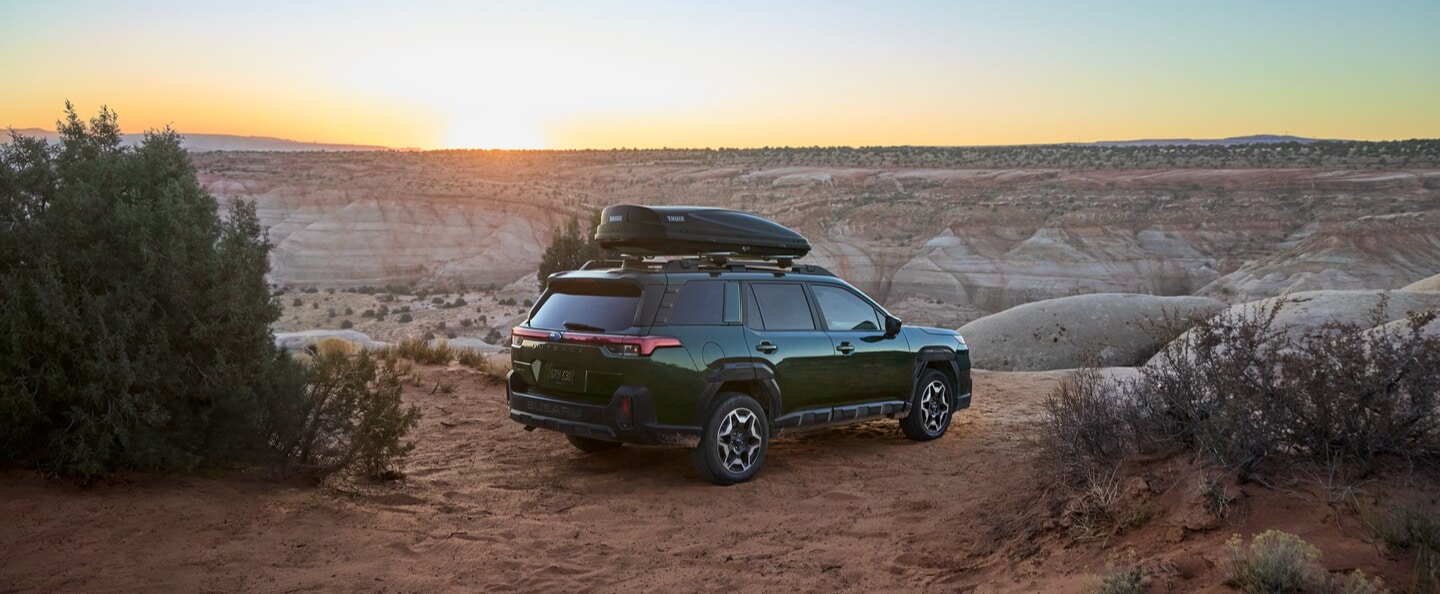
While the 2025 Subaru Outback already featured a rugged and adventure-ready design, the 2026 model takes things further with a bolder overall appearance. The redesigned front fascia, more SUV-like proportions, and revised lighting elements give the Outback a more adventure-ready character while maintaining the nameplate's familiar identity.
Subaru also expanded several previously limited features across the lineup. Reinforced ladder-style roof rails that were previously reserved for the Wilderness trim now come standard on all 2026 Outback models. These rails are designed to support heavier cargo loads and are well-suited for rooftop tents.
New 18-inch wheels replace the previous 17-inch designs, and a power liftgate is now standard, adding extra convenience when loading groceries or gear for your Kennewick outings.
Performance & Capability
Under the hood, the 2026 Subaru Outback carries over the same proven powertrain lineup from the 2025 model year. Standard trims continue to use a 2.5-liter SUBARU BOXER® engine producing 180 horsepower and 178 pound-feet of torque. XT and Wilderness models upgrade to a turbocharged 2.4-liter engine with 260 horsepower and 277 pound-feet of torque.
Standard Symmetrical All-Wheel Drive delivers surefooted handling and control in various conditions, while Subaru X-MODE® helps improve traction on snow, mud, gravel, and uneven terrain. For drivers who enjoy exploring beyond the pavement, the Outback Wilderness takes off-road capability to the next level with increased ground clearance, all-terrain tires, skid plates, dual-function X-MODE, and unique suspension tuning.
Interior Space and Comfort
The redesigned cabin of the 2026 Subaru Outback improves in nearly all aspects, including comfort, usability, and space. Compared to the 2025 model, the new Outback feels roomier for both front and rear occupants. Additionally, the taller and wider cargo area increases available storage by approximately two cubic feet behind the rear seats (34.6 cubic feet) and five cubic feet with the rear seats folded down (80.5 cubic feet).
Material quality also sees an upgrade for 2026. StarTex® water-resistant leatherette upholstery now comes standard across the lineup, replacing the cloth upholstery that served as the standard material on the 2025 model. The single-zone climate system was replaced with standard dual-zone automatic climate control, and heated front seats and power driver-seat adjustments are now included in all trims. Depending on the configuration, you can further upgrade your Tri-Cities drives with available amenities like:
- Nappa leather upholstery
- Ventilated front seats
- Heated rear outboard seats
- Driver-position memory settings
- Hands-free liftgate
- Heated steering wheel
- Power moonroof
Technology and Safety
One of the biggest differences between the 2025 and 2026 Subaru Outback is the technology experience. For 2026, every trim now comes standard with a 12.1-inch touchscreen, wireless Apple CarPlay and Android Auto, and a fully digital instrument cluster. By comparison, the 2025 Outback lineup offered a smaller standard 7-inch display on lower trims, while higher tiers used an 11.6-inch screen
The 2026 Subaru Outback also expands its driver-assistance offerings to include available systems like Highway Active Lane Change Assist, Pre-Curve Speed Control, Highway Automatic Resume Assist, and Highway Hands Free Assist. Subaru also moved multiple driver aids to the base trim, including Blind-Spot Warning with Lane Change Assist, Rear Cross-Traffic Warning, and DriverFocus® Distraction Mitigation. Other standard assistive technologies include:
- Pre-Collision Braking System
- Lane-Keep Assist and Sway Warning
- Advanced Adaptive Cruise Control with Lane-Centering
- Reverse Automatic Braking
- Steering-adaptive LED headlights with automatic high beams